🚘 Cars today can do things that would have sounded like science fiction a decade ago: they can read speed limit signs, warn you if you drift towards a white line, and even brake automatically if you don’t react in time. That technology is brilliant — until something shifts, recalibration is missed, and the car quietly stops “seeing” the road the way it should.
Advanced Driver Assistance Systems (ADAS) are now common across modern vehicles, and while they’re designed to improve safety, they can also create unexpected MOT problems when warning lights appear or systems stop working as intended. The tricky bit is that many ADAS issues don’t feel like a typical mechanical fault. The car may drive “fine”… right up until it doesn’t.
What is ADAS (in plain English)?
ADAS stands for Advanced Driver Assistance Systems. It’s a collection of cameras, sensors and radar units that help your car interpret its surroundings and support you while driving. Depending on the vehicle, ADAS may include lane departure warning, lane keep assist, automatic emergency braking, adaptive cruise control, traffic sign recognition, blind spot monitoring, and parking assistance.
These systems rely on the position of cameras and sensors being extremely accurate. A small change in alignment can affect how the vehicle judges distance, speed, and lane position.
Why ADAS can affect your MOT
MOT testing isn’t about “testing every feature”, but it is about road safety and safety-critical warnings. If the vehicle displays certain warning lights or indicates that a safety system is not functioning correctly, that can become an MOT issue.
In practice, drivers often get caught out because ADAS faults are sometimes triggered by everyday repairs — and the warning doesn’t always appear immediately. You might replace a windscreen, have alignment work done, or suffer a minor bumper knock… then a week later you start seeing intermittent alerts.
Common everyday scenarios that knock ADAS out of calibration
🪟 Windscreen replacement
A large number of vehicles have a forward-facing camera mounted near the rear-view mirror. If the windscreen is replaced, that camera position can shift even slightly. Many vehicles then require calibration so the system correctly interprets lane markings, distance, and sign recognition.
🛞 Wheel alignment or suspension work
When you adjust the geometry of the car, you can also change the “reference” the systems use. Even if the repair is perfect mechanically, the sensor system may still need recalibrating afterwards to match the new geometry.
💥 Minor impacts (including kerbs and potholes)
A low-speed bump that barely marks the bumper can still move a radar sensor bracket behind the scenes. Pothole impacts can also jolt mounting points. The car can continue to drive, but safety features may be reduced or disabled.
🧼 Obstructed sensors and dirty lenses
Road salt, winter grime and heavy rain can block sensor areas and cause temporary faults. If an alert clears after cleaning, fine — but if it returns, it may indicate alignment or sensor issues rather than simple dirt.
Different drivers, different risks
👨👩👧 Families
Family cars are often full of sensors — reversing cameras, parking sensors, blind spot monitoring. Minor knocks in tight car parks happen easily, and ADAS faults can appear later. If the car is relied upon for school runs and motorway trips, safety systems matter more than ever.
🚗 Commuters
Adaptive cruise control and emergency braking are commonly used in stop-start traffic. If these systems are compromised, your reaction buffer is reduced and you may be less protected during sudden traffic changes.
🌾 Rural/high-mileage drivers
High mileage, stone chips, and uneven roads increase the risk of sensor obstruction or impact. ADAS problems can be more common when vehicles are exposed to harsher road conditions.
👵 Elderly or new drivers
ADAS can give reassurance, but if it’s unreliable, it may create a false sense of security. A system that brakes late, warns inconsistently, or fails intermittently can be more dangerous than one you know you don’t have.
How calibration works (and why it’s precise)
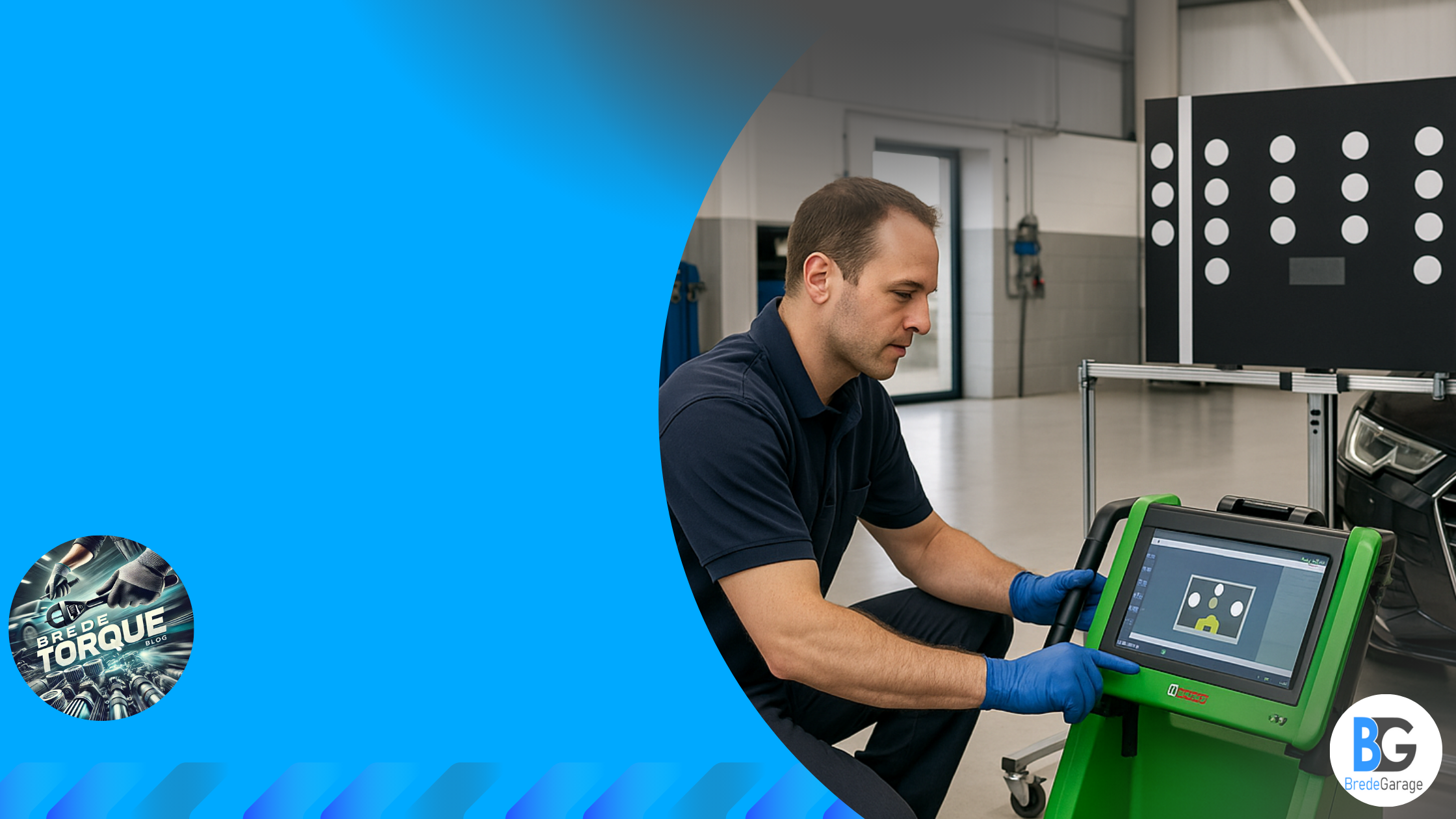
ADAS calibration is about teaching the car’s systems what “straight ahead” and “normal road position” truly are. Calibration may be:
- Static calibration carried out in a workshop using specialist calibration boards and precise measurements.
- Dynamic calibration carried out on the road, with the system learning under controlled driving conditions.
Some vehicles need one method, some require both. The key is that it must be done to manufacturer specifications — not guessed, and not skipped.
Signs your ADAS needs checking
If any of the following apply, it’s worth having the system inspected:
- You’ve had a windscreen replacement recently
- You’ve had alignment or suspension work completed
- You’ve had a minor front-end impact or bumper repair
- You’re seeing intermittent warnings like lane assist unavailable, front assist error, or camera blocked
Even if the car drives normally, these warnings can signal that the system is either disabled or operating with reduced accuracy.
Conclusion: don’t let hidden tech catch you out
ADAS is designed to reduce accidents and support safer driving — but only when it’s correctly aligned and functioning as intended. If warning lights appear or repairs have been carried out that could affect calibration, it’s best to address it before MOT time or before the system is needed in a genuine emergency.
📅 Book your service or MOT at Brede Garage
https://www.bredegarage.co.uk/book-online