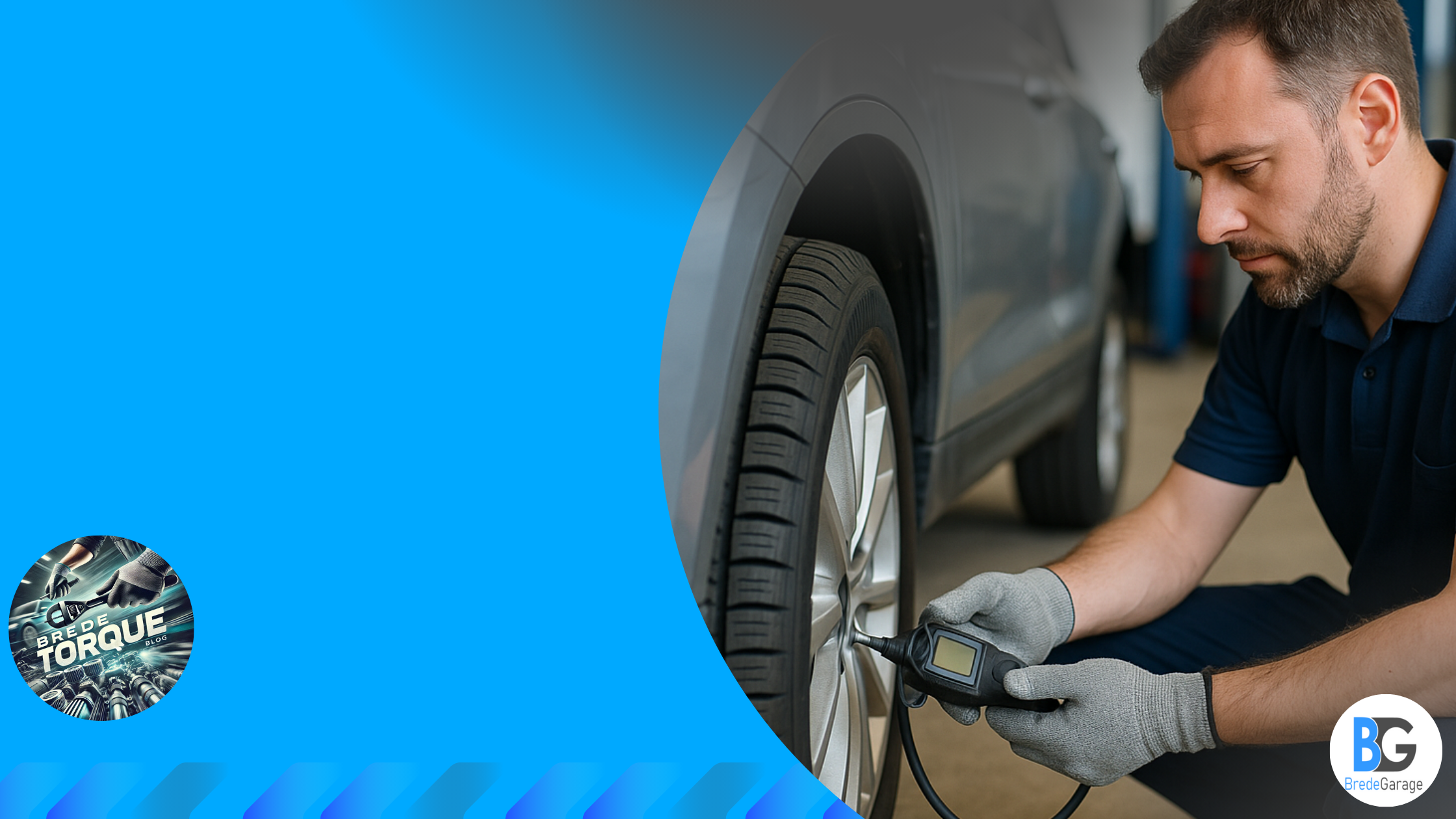
How Often Should You Really Be Checking Your Tyres?
🚗 You don’t normally think about your tyres until something goes wrong — a slow puncture, a failed MOT, or that uneasy vibration at motorway speeds. But tyres are your car’s only contact with the road. That means they influence your braking, steering, grip in the wet, and even fuel economy — every single journey.
In reality, tyre problems don’t usually happen with a dramatic bang. They build up quietly: pressure drops bit by bit, tread wears unevenly, or a small impact causes damage you don’t spot until it becomes expensive (or unsafe). So the big question is: how often should you actually be checking them?
Why your tyres matter more than most drivers realise
Your tyres aren’t “just rubber”. They’re engineered to work at the correct pressure and temperature, with the right tread pattern depth to push water away and maintain grip. When tyre pressure is wrong or tread is low, your stopping distance increases and your car’s stability drops — especially in rain.
If you’ve ever felt your car “float” slightly on a wet road, or noticed it doesn’t feel as planted through bends, tyres are one of the first places to look.
How often should you check your tyres?
✅ For most UK drivers, a good rule is:
- Every 2 weeks: check tyre pressure and do a quick visual inspection
- Once a month: check tread depth properly
- Before long trips: check pressures, tread, and sidewalls
Tyres naturally lose small amounts of air over time, even without a puncture. And damage can happen without you noticing — especially if you clip a kerb or hit a pothole.
🚙 Commuters
If you’re driving most days, your tyres experience constant heat cycles (warming up, cooling down) and repeated loads from braking and cornering. A fortnightly pressure check reduces the risk of underinflation, improves fuel economy, and keeps handling predictable on faster roads.
👨👩👧 Families
Family cars often carry heavier loads — passengers, pushchairs, shopping, luggage. That extra weight increases tyre wear and heat, especially if tyres are slightly underinflated. Regular checks help prevent uneven wear and reduce the risk of tyre failure on motorway journeys.
🌾 Rural & high-mileage drivers
Country lanes are tougher on tyres than most people realise. Sharp stones, potholes, mud and debris can cause sidewall scuffs, small cuts, and slow punctures. If you’re doing rural routes regularly, a weekly visual check is genuinely worth it.
👵 Elderly or low-mileage drivers
Even if your car is parked more than it’s driven, tyres still age. Rubber can harden and crack, and pressure loss can go unnoticed for months. If you don’t drive often, monthly checks are still essential — and tyre age becomes more important than tread alone.
Legal tread limit vs safe tread level (and why it matters)
In the UK, the legal minimum tread depth is 1.6mm across the central three-quarters of the tyre and around the full circumference. If you’re below that, your car is not roadworthy and will fail an MOT.
But here’s the part most drivers miss: you can still be “legal” and not be “safe” — especially in heavy rain. Many safety experts recommend changing tyres closer to 3mm because wet grip and water dispersal reduce noticeably below that.
🪙 The quick 20p reminder
Pop a 20p coin into the tread grooves. If you can clearly see the outer band, you may be getting close to the point where wet-weather performance drops off — even if you’re still legal.
Tyre pressure: the silent killer (and the expensive one)
Incorrect tyre pressure is one of the most common issues we see in garages — and it’s rarely obvious from looking at the tyre. Underinflation can increase fuel consumption, worsen braking, and cause tyres to wear faster on the outer edges. Overinflation can reduce grip and wear the centre of the tyre faster than it should.
If your car feels “less planted”, or you notice uneven tread wear, pressure and alignment are two of the first checks worth doing.
How to check tyre pressure properly ✅
- Check pressures when tyres are cold (before driving far)
- Use the pressure from the door sticker/fuel flap/handbook (not the tyre sidewall)
- Check all four tyres — and the spare if you have one
- If your car has TPMS, don’t rely on it alone: gradual loss isn’t always flagged early
What damage should you look for?
A quick visual inspection can catch problems early. Look for:
- Cracks in the sidewall
- Bulges (often pothole or kerb impact)
- Uneven wear (alignment/suspension/pressure issues)
- Nails or screws embedded in the tread
If you spot anything worrying, it’s always safer to have it checked properly before it becomes a blowout or MOT failure.
Seasonal reality: why tyres change with the weather
Cold snaps lower tyre pressure quickly because air contracts as temperature drops. That’s why tyre pressure warnings often appear at the first proper cold spell. In summer, the opposite happens — pressures can rise slightly as tyres heat up. The solution isn’t guesswork; it’s simply checking tyres regularly when they’re cold and inflating to the manufacturer’s figures.
From the workshop: what we commonly see
A lot of tyre-related issues start with something small: a slight kerb knock, a slow puncture, or a gradual pressure loss that never gets corrected. Then you see the knock-on effects — uneven wear, noisy tyres, steering vibration, longer stopping distances, and unexpected MOT failures. A quick check every couple of weeks usually prevents the entire chain.
Conclusion: a small habit that pays off
Tyre checks are one of the highest value habits you can build as a driver. They cost almost nothing, take a couple of minutes, and can prevent accidents, reduce running costs, and help you avoid an MOT surprise.
📅 Book your service or MOT at Brede Garage
https://www.bredegarage.co.uk/book-online