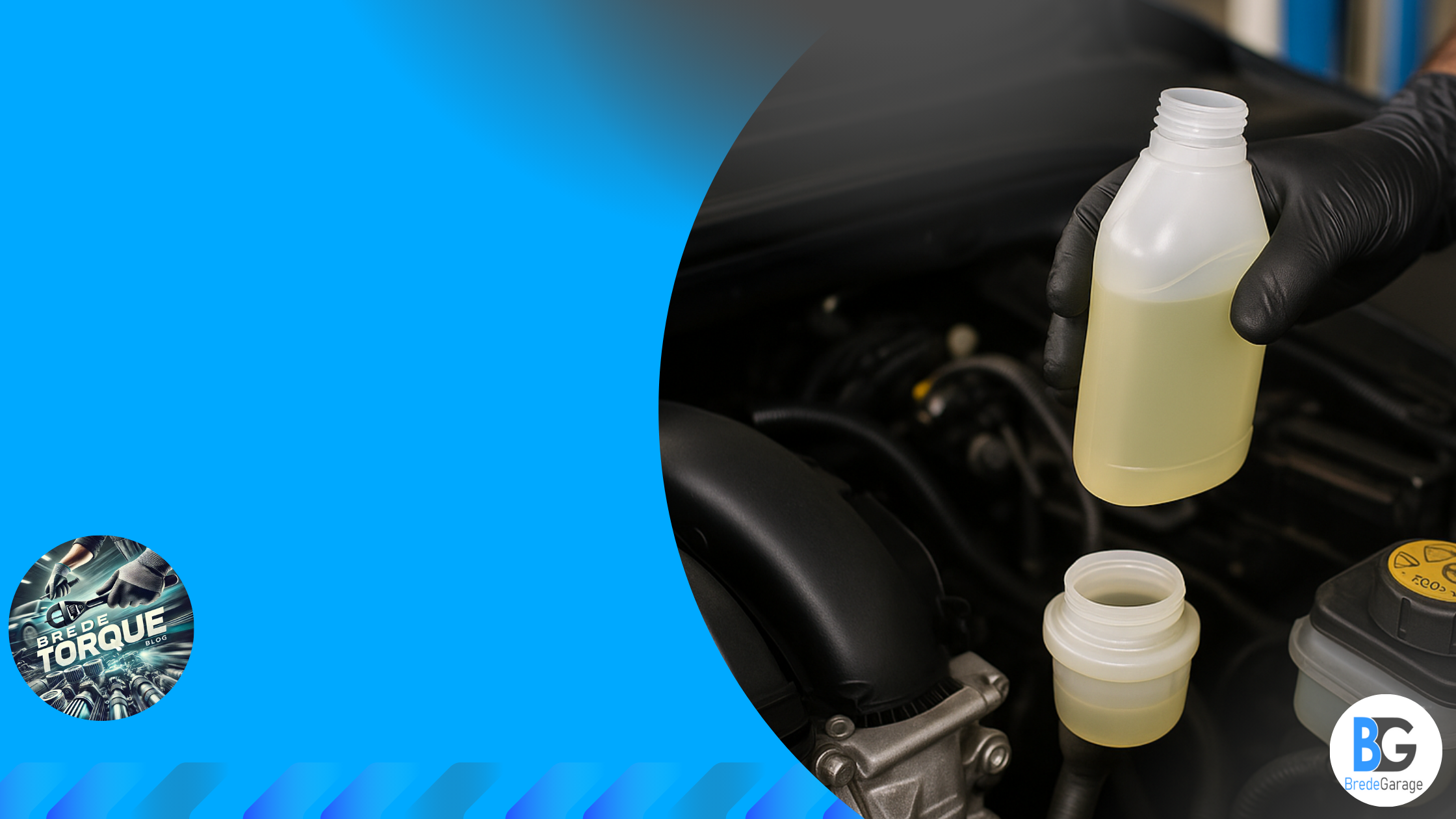
When it comes to car maintenance, most drivers know to check their tyres, change the oil, and top up their washer fluid. But there’s one vital fluid quietly doing its job behind the scenes — and neglecting it could seriously impact your safety: brake fluid.
Despite being one of the most critical elements in your car’s braking system, brake fluid is often overlooked. In the UK, ignoring it can be the difference between passing or failing your MOT — or worse, losing braking performance when you need it most.
🧪 What Is Brake Fluid and Why Does It Matter?
Brake fluid is a hydraulic fluid. Its job is to transfer force from your brake pedal to the brake callipers or drums. When you press the pedal, the fluid transmits pressure through the brake lines to slow the vehicle.
Brake fluid must remain non-compressible and stable across extreme temperatures. However, it is hygroscopic, meaning it absorbs moisture from the air over time. This moisture lowers the boiling point and increases internal corrosion risk.
🚨 What Happens When Brake Fluid Goes Bad?
Brake fluid degrades gradually, making it easy to ignore. Common symptoms include:
- Spongy or soft brake pedal feel
- Longer stopping distances
- Dark or contaminated fluid
- Brake fade during heavy braking
As moisture increases, the fluid can boil under pressure, causing sudden loss of braking effectiveness — particularly dangerous on hills or during emergency stops.
🧰 MOT Failure Risk & Why It’s Often Missed
Brake fluid isn’t directly tested during an MOT, but its condition can cause failures through:
- Spongy or ineffective brakes
- Low fluid levels
- Corroded brake lines caused by moisture
At Brede Garage, we regularly see MOT issues traced back to poor brake fluid condition, even when no dashboard warning light is present.
🔍 How Brake Fluid Is Tested Professionally
Professional testing checks the fluid’s ability to perform safely:
- Boiling point testing
- Moisture content analysis
- Visual contamination inspection
Brake fluid should typically be replaced every two years, or sooner for high-mileage vehicles or those used for towing.
🛑 Brake Fluid Myths — Busted
- “It only needs topping up.” Moisture contamination is the real risk.
- “It lasts the life of the car.” It degrades over time.
- “I’ll know when there’s a problem.” Often, you won’t — until braking is compromised.
🧠 Final Thoughts
Brake fluid may not be glamorous, but it is essential. If you can’t remember when it was last changed, it’s probably overdue. Keeping it fresh protects your braking system, your MOT status, and your safety.